The Quiet Power of Reducing Food Waste at Home
I’ve incorporated reusable bags, public transport and a reduce/reuse/recycle mindset into daily life, but one area I return to again and again is household food waste.
Looking back over the recipes I’ve shared here, a pattern emerges. Cheese comes up a lot. A lot a lot. I refuse to count how many recipes call for cheese, or how many don’t. At points I even left out a particular cheese, purely so readers wouldn’t think I was in the pocket of Big Cheese.
I promise, I’m just an ardent fan.
My education began with Sophie, who taught me the fundamentals. Her depth and breadth of knowledge felt boundless at the time and, honestly, still does. These days you can find her at Cheesemonger Sophie in Healesville, and it’s always a delight when I get to visit. Equal parts learning experience and happy place.
From there, I indulged my natural inclinations both professionally and personally for many years as a cheesemonger. Along the way I met many others who were generous with their knowledge. Cheese people tend to be like that. You don’t stay in this industry unless you really care.
There was also a stint writing about cheese for Olivia & co at the sadly departed Harper & Blohm. That was a privilege and a half. Weekly newsletters designed to educate and entertain on all manner of cheesy culture. A small side note, but one that still makes me laugh: a loyal customer once enquired as to whether I might be available to write their obituary when the time came 😯. High praise? Slightly alarming? Both.
These days I work as a tour guide at our city’s main food market, Queen Victoria Market. I will confess to lingering longer than strictly necessary at my favourite cheese stalls. I also work back of house at the food and beverage awards where being surrounded by all manner of curdy confection makes for one very happy me.
I could throw some facts and stats at you about why cheese is nutritious, but honestly, why bother. It tastes so darn delicious. There’s something slightly magical about how milk becomes cheese in so many different incarnations and flavours. When you work with cheese, you never stop learning new stories. And the people involved, particularly in Australia’s small, tight-knit industry, are deeply passionate. They have to be; It ain’t no easy road to riches.
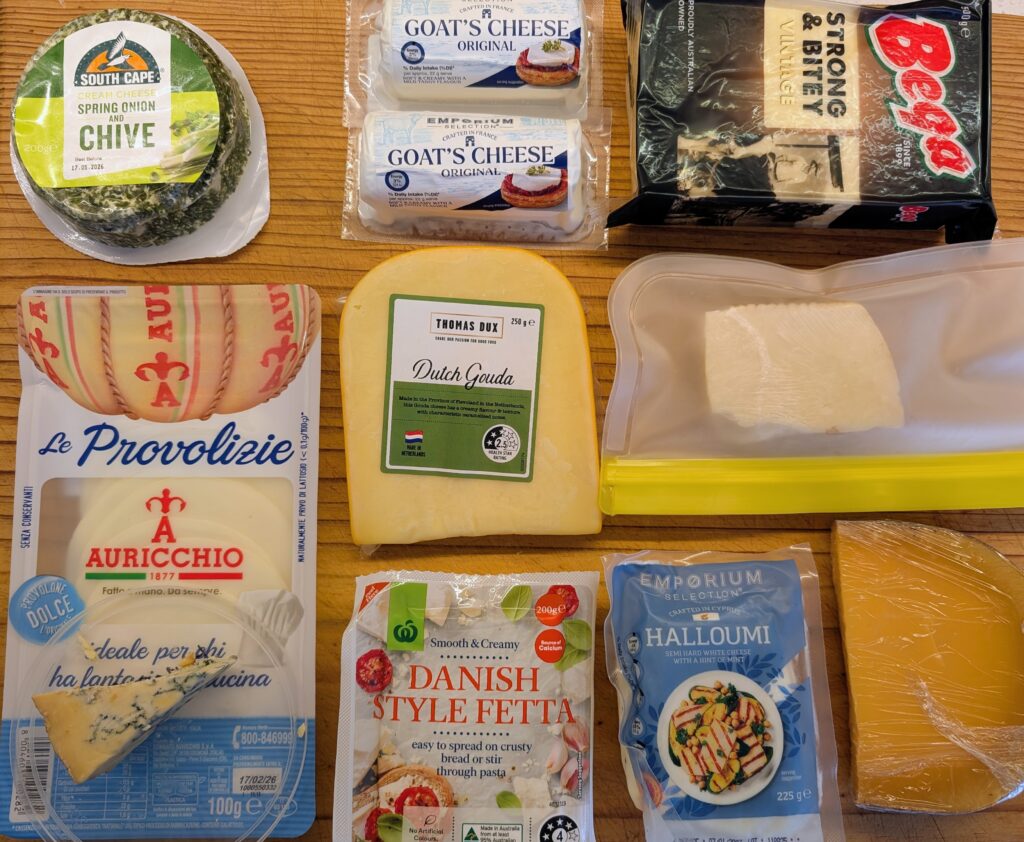
In the spirit of transparency, I thought I’d do a quick audit of what’s in my fridge. I have not edited this in any way. If I did edit it, I would have at least taken the plastic wrap off the aged Gouda.
From top left:
As you can see, apart from the aged Gouda and Stilton, the other eight are just standard stalwarts in my household. There’s not even a wedge of gooey white mould, no voluptuous burrata, no stinky washed rind sulking in the corner. Make of that what you will.
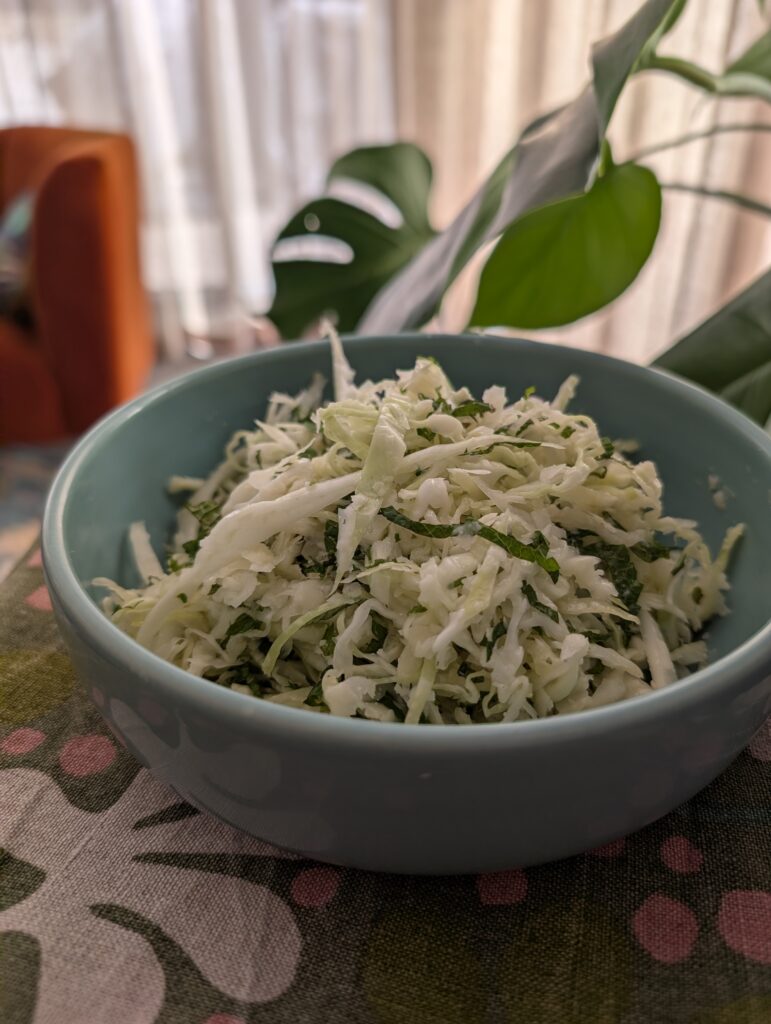
Before I go, here’s a recipe I make often. There’s so little to it, it’s barely a recipe at all. It’s great with anything fried, schnitzel in particular.
Finely shred white cabbage, add a generous amount of fresh mint (it has to be fresh — dried mint has an altogether different, more earthy flavour), and finish with a mound of freshly grated pecorino.
Quantities? How long is a piece of string? As a loose guide:
Dress well and add salt if you need it. Your pecorino may bring enough salt, but you won’t know until you taste it.
Toss really well together and let it sit until you need it.
I’ve incorporated reusable bags, public transport and a reduce/reuse/recycle mindset into daily life, but one area I return to again and again is household food waste.
We live in a small apartment with a very small kitchen, so I run a tight ship. Anything that earns space in there has to punch above its weight. Products have to prove themselves. If they don’t earn their keep, they’re out.
This is a hug in the shape of a loaf tin, reassuring in only the way an old-school reliable pantry cake can be. I say pantry cake because mostly I have all the ingredients in the pantry, even if that is a set of drawers in my small, city apartment.